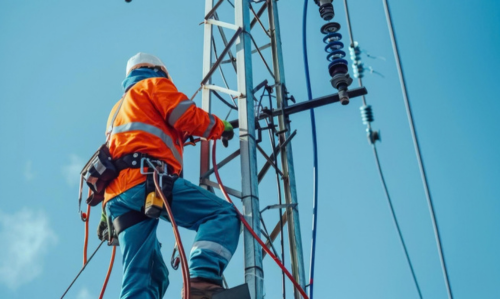
Punctured insulators can affect the electrical reliability and operational safety of high-voltage transmission lines. Identifying defective insulator discs at an early stage helps utilities plan maintenance activities, reduce the risk of unexpected failures, and maintain reliable power transmission.
Our Live Line Punctured Insulator Detection (PID) Testing service is designed to identify potentially punctured or defective insulator discs on energized transmission lines without requiring a planned shutdown, where the testing method and site conditions permit.
We undertake PID testing on 145 kV, 245 kV, and 420 kV live transmission lines, covering SSN/DSN and STN/DTN insulator strings. Our service includes on-site testing, data collection, fault analysis, and the preparation and submission of a final report containing details of identified defective insulators.
We carry out punctured insulator detection testing on energized transmission lines rated 145 kV, 245 kV, and 420 kV, subject to the approved testing methodology and applicable safety requirements.
The testing process helps identify insulator discs that may have internal punctures or electrical defects, supporting timely maintenance planning and improved transmission line reliability.
Our testing scope includes PID testing of the following insulator string configurations:
Testing is carried out according to the applicable procedures and site requirements to identify and document suspected defective insulator discs.
During the inspection and testing process, relevant PID test readings and field observations are collected and recorded. Accurate data collection supports the assessment of individual insulator strings and helps establish the location of suspected defects.
The collected information is organized for subsequent technical review and fault analysis.
Following the completion of field testing, the collected PID data is reviewed to identify abnormal readings and potential insulator faults.
A fault analysis report is prepared based on the test results and recorded observations. This analysis helps identify defective or suspected defective insulator discs and provides useful information for planning further inspection, replacement, or maintenance activities.
We prepare and submit a final PID testing report containing the test findings and available details of identified defective insulators.
The report includes the following information, wherever applicable:
This structured reporting helps the maintenance team locate suspected faulty discs accurately and plan the necessary corrective action.
The transmission line voltage, tower locations, insulator string configurations, and relevant site information are reviewed before testing begins.
The testing team confirms the approved work methodology, equipment readiness, access arrangements, and applicable live-line safety procedures before commencing field activities.
Punctured insulator detection testing is performed on the specified energized transmission lines using the appropriate testing equipment and approved procedures.
Test readings, tower identification details, phase information, and relevant insulator disc positions are recorded and compiled for technical evaluation.
The collected data is reviewed to identify abnormal readings and suspected defective insulator discs based on the applicable assessment criteria.
A comprehensive PID report is prepared and submitted with the test findings, fault analysis, and available defective insulator location details.
Our Live Line Punctured Insulator Detection service is suitable for:
Live Line PID testing is a method used to identify potentially punctured or defective insulator discs on energized transmission lines. It helps maintenance teams identify possible faults without necessarily requiring a line shutdown.
The specified testing scope covers 145 kV, 245 kV, and 420 kV live transmission lines, subject to the approved testing methodology and applicable safety requirements.
The testing scope includes SSN, DSN, STN, and DTN insulator strings.
Yes, the service is intended for live-line testing. Work is performed only when the equipment, personnel, site conditions, and approved live-line procedures permit safe execution.
The report includes relevant test findings, fault analysis, and defective insulator details such as the line identification, tower location number, phase, and fault disc number counted from the cross-arm.
Let’s Build Better Power Infrastructure
Speak with R.P. POWER for electrical power sector services across Maharashtra & India.
© 2026 R.P. POWER. All rights reserved.
Turnkey Electrical Projects & Specialized Services