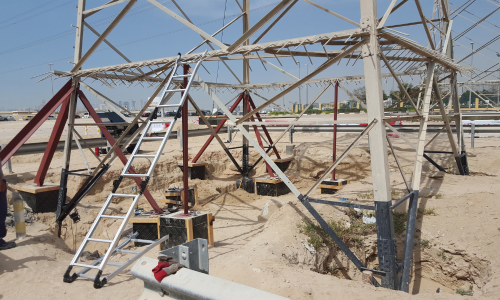
Transmission tower stubs are critical structural components that connect the tower legs to their foundations. Over time, exposure to moisture, unsuitable soil conditions, chemical substances, corrosion, and saline environments can cause deterioration around tower stubs and embedded steel components.
Stub Strengthening of Deteriorated Tower Legs helps address these issues through appropriate inspection, structural assessment, and approved strengthening or restoration methods. Timely intervention can help improve structural reliability, reduce further deterioration, and extend the service life of transmission tower infrastructure.
Our service focuses on identifying the causes of deterioration, assessing the affected tower leg, and implementing suitable strengthening measures according to site conditions and engineering requirements.
Continuous exposure to wet, marshy soil caused by rainfall, accumulated water, or nearby drainage discharge can increase the risk of corrosion and deterioration around tower stubs. Prolonged moisture exposure may affect protective coatings and embedded steel components.
Appropriate inspection, drainage improvement, and suitable protective measures can help reduce continued exposure to moisture.
The accumulation of garbage, excess soil, and other materials around tower legs can obstruct drainage and retain moisture near the stub and chimney area. Such conditions may accelerate deterioration and make inspection more difficult.
Removing unsuitable accumulated materials and maintaining proper drainage can help protect the tower foundation area.
Fertilizers, agricultural chemicals, and industrial waste may introduce substances that contribute to the corrosion of embedded steel and the deterioration of surrounding concrete, depending on their composition and exposure conditions.
Inspection and assessment help determine the extent of chemical damage and identify suitable repair, strengthening, and protective measures.
Galvanized iron (GI) earthing strips embedded in the tower chimney may deteriorate when protective galvanization is damaged or when exposure conditions promote corrosion. Deterioration of earthing components may affect the reliability of the tower’s grounding system.
Inspection of accessible earthing connections and embedded components helps identify corrosion concerns and determine the appropriate repair or replacement requirements.
Transmission towers located near the seashore are exposed to saline air, moisture, and salt deposits. These conditions can accelerate corrosion of exposed steel components and contribute to deterioration around tower stubs and foundations.
Suitable corrosion protection, condition monitoring, and maintenance measures can help manage the effects of coastal environmental exposure.
We assess the affected tower leg and stub area to identify visible corrosion, concrete deterioration, moisture exposure, and other potential structural concerns. The findings help determine the appropriate restoration approach.
Where required by the approved repair method, loose or damaged concrete and unsuitable surrounding materials are removed carefully to prepare the affected area for restoration.
Strengthening work is planned according to the extent of deterioration and the recommendations of qualified structural professionals. Suitable repair or strengthening techniques are selected based on the condition of the steel stub, foundation, and surrounding concrete.
Appropriate corrosion-control treatments and protective systems may be applied to affected steel components, depending on the site conditions and approved technical specifications.
Damaged concrete around the stub or chimney can be repaired using suitable repair materials and approved procedures. Measures to reduce moisture entry and protect the repaired area may also be incorporated where necessary.
Where water accumulation or surrounding environmental conditions contribute to deterioration, suitable drainage and site-maintenance measures may be recommended to help reduce future exposure.
Step 1: Site Inspection
Inspect the affected tower leg, stub, chimney, surrounding soil, and visible steel components.
Step 2: Deterioration Assessment
Identify potential causes, including moisture, chemical exposure, corrosion, poor drainage, and saline conditions.
Step 3: Repair Planning
Determine the appropriate strengthening and restoration method based on the site assessment and approved engineering recommendations.
Step 4: Strengthening and Restoration
Carry out the specified repair, strengthening, corrosion-protection, and concrete-restoration activities using suitable materials and procedures.
Step 5: Quality Inspection
Inspect the completed work against the approved scope, technical specifications, and applicable quality requirements.
Step 6: Preventive Recommendations
Where appropriate, recommend measures such as drainage improvements, removal of accumulated materials, corrosion monitoring, and periodic inspections.
Our service is relevant to transmission towers affected by:
Tower stub strengthening involves repairing or reinforcing deteriorated tower stub areas and related structural components to address damage and maintain the required structural performance.
Common causes include prolonged moisture exposure, poor drainage, chemical contamination, corrosion of embedded steel components, and saline coastal environments.
Yes. Persistent moisture and poor drainage can create conditions that promote corrosion and deterioration around tower stubs and embedded steel components.
Salt-laden air and moisture can accelerate corrosion of exposed steel and damage protective systems, making inspection and appropriate corrosion protection particularly important in coastal areas.
Depending on the extent and nature of the damage, suitable repair or strengthening may be possible. A site inspection and engineering assessment are necessary to determine the appropriate method.
Let’s Build Better Power Infrastructure
Speak with R.P. POWER for electrical power sector services across Maharashtra & India.
© 2026 R.P. POWER. All rights reserved.
Turnkey Electrical Projects & Specialized Services