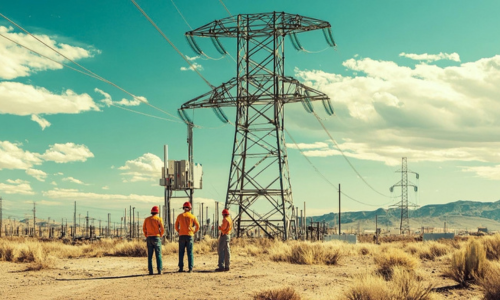
Regular transmission line patrolling is essential for identifying defects in transmission line components, assessing line conditions, and planning preventive and predictive maintenance. Early detection of potential faults helps utilities take corrective action before minor defects develop into major failures or unexpected power interruptions.
Our Transmission Line Patrolling Services focus on inspecting transmission towers, line components, and associated infrastructure to identify visible defects and potential maintenance requirements. Based on inspection findings, maintenance activities can be planned through hot-line maintenance or scheduled outages, wherever appropriate.
We provide two types of transmission line inspection services: Monkey Patrolling and Ground Patrolling, helping support systematic inspection of transmission line infrastructure under different field conditions.
Monkey Patrolling involves the inspection of transmission towers by climbing through the inner body of the tower up to the upper cross-arm level, while maintaining the required safe body clearance and following approved climbing and live-line safety procedures.
This inspection method helps identify visible defects and abnormalities in tower and line components that may not be easily assessed from the ground.
Key inspection activities may include:
Monkey Patrolling must be carried out by trained and authorized personnel using approved procedures, suitable safety equipment, and the required clearances for the specific line conditions.
Ground Patrolling involves a walk-down survey along the transmission line route to inspect towers, conductors, insulators, and other visible line components from ground level. Patrolling can be conducted during both daytime and nighttime, depending on the inspection objectives and approved operating procedures.
Daytime inspections help identify visible structural and environmental issues, while nighttime inspections can support the identification of certain visible abnormalities using suitable inspection equipment and methods.
Key inspection activities may include:
Ground Patrolling provides useful information about the physical condition of transmission line infrastructure and its surrounding environment.
Transmission Line Patrolling helps identify defects and abnormal conditions that may require corrective action. Inspection findings can be documented and used to prioritize maintenance activities according to the nature and severity of the identified issues.
Based on the findings, utilities can plan:
Timely identification and assessment of defects can help reduce the risk of unexpected breakdowns and improve transmission line reliability.
Review the transmission line route, tower locations, inspection requirements, and applicable safety procedures before starting patrolling activities.
Carry out Monkey Patrolling or Ground Patrolling according to the approved inspection plan and the specific requirements of the transmission line.
Observe and document visible defects, abnormal conditions, environmental concerns, and components that may require further technical assessment.
Compile inspection observations with relevant tower identification details, defect descriptions, and supporting photographs where available.
Use the inspection findings to support decisions regarding preventive maintenance, predictive maintenance, hot-line maintenance, or planned outages, as appropriate.
Track reported defects and support follow-up inspections or maintenance planning based on the identified risks and utility requirements.
Transmission line patrolling is the systematic inspection of transmission towers, conductors, insulators, line fittings, and surrounding areas to identify defects and potential maintenance requirements.
Monkey Patrolling is an inspection method in which trained personnel climb through the inner body of a transmission tower to inspect accessible components up to the upper cross-arm level, following approved safety procedures.
Ground Patrolling is a walk-down survey conducted along the transmission line route to identify visible defects, structural concerns, vegetation issues, and other conditions that may affect line reliability.
Yes. Ground Patrolling may be conducted during both daytime and nighttime, depending on the inspection objectives, available equipment, site conditions, and approved safety procedures.
The defect is recorded and assessed so that the utility or responsible maintenance team can determine the appropriate corrective action. This may involve further inspection, hot-line maintenance, or a planned outage.
Let’s Build Better Power Infrastructure
Speak with R.P. POWER for electrical power sector services across Maharashtra & India.
© 2026 R.P. POWER. All rights reserved.
Turnkey Electrical Projects & Specialized Services